Ukraine Pushes Ahead, the West Sends Mixed Signals, and China Draws Closer: Rosatom’s Uneasy Month
Even as the war grinds on, Ukraine continues to expand its civilian nuclear ambitions. Britain has tightened sanctions on Russia’s nuclear sect...
News

Publish date: June 23, 2017
News
Two decades ago, a green four-car train would make the rounds every few months to Russia鈥檚 snowy Kola Peninsula to cart nuclear fuel and radioactive waste more than 3000 kilometers south from the Arctic to the Ural Mountains.
At the time, the lonely rail artery was the center of a logistical and financial bottleneck that made Northwest Russia, home of the once feared Soviet nuclear fleet, a toxic dumping ground shrouded in military secrecy.
More than a hundred rusted out submarines bobbed in the icy waters at dockside, their reactors still loaded with nuclear fuel, threating to sink or worse. Further from shore and under the waves laid other submarines and nuclear waste intentionally scuttled by the navy. Still more radioactive spent fuel was piling up in storage tanks and open-air bins, on military bases and in shipyards.
One of those places was Andreyeva Bay, a run down nuclear submarine maintenance yard just 55 kilometers from the Norwegian border.
Since the birth of the nuclear navy in the 1960s, the yard came to be a dumping ground for 22,000 spent nuclear fuel assemblies offloaded from hundreds of submarines. Cracks in storage pools made worse by the hard Arctic freeze threatened to contaminate the Barents Sea. At one point, experts even feared the radioactive morgue might spark an uncontrolled nuclear chain reaction.
Andreyeva Bay. (Photo: Amund Trellevik/NRK)
Infrastructure, technology and the Kremlin were failing to keep up with the mushrooming catastrophe. The nuclear fuel train could only bear away 588 fuel assemblies at a time three or four times a year 鈥� little more than the contents of one nuclear submarine per trip. Even if the train ran on schedule, removing broken or deformed nuclear fuel elements at Andreyeva Bay was still seen as impossible.
Yet even mentioning the environmental and security storm clouds was taboo: While the Navy begged the public to donate potatoes to feed sailors it was too broke to pay, the Kremlin prosecuted environmentalists who drew attention to the mounting desperation .
In the bleak and politically chaotic late 1990s, many experts, like 91影视鈥檚 Andrei Zolotkov, thought that the carcinogenic remains of the Cold War would lie neglected at Andreyeva Bay for decades 鈥� or at least until Russia somehow woke up wealthy enough to deal with them.
Now, Russia is only slightly better off, yet the first containers of spent nuclear at Andreyeva Bay will begin to be bourn away by sea on June 27, marking the culmination of a multi-million dollar international effort sparked by 91影视 in 1995.
The first container . It and the 2999 that will follow will leave Andreyeva Bay on specially outfitted ships like the 鈥� itself a bit of expertise donated by Italy under the Northern Dimensions Environmental Partnership, an enormous Russian nuclear cleanup fund managed by the European Bank of Reconstruction and Development.
A map of where Andreyeva Bay is located. (Graphic: 91影视)
The transport ships will join a railhead at Atomflot, Murmansk鈥檚 nuclear icebreaker port, and from there, the fuel containers will go by train to the Mayak Chemical Combine, near the Urals city of Chelyabinsk, for reprocessing.
It鈥檚 a mammoth effort. A total of about 40 ship-to-train transports will have to be made before the bulk of the fuel is cleared out over the coming five years. But when it鈥檚 done, one of the most deviling radiation threats in the Arctic will be history.
Bring the waste out of the shadows
鈥淭he Andreyeva Bay project has shown that international projects aimed at liquidating nuclear and radioactive threats can be successful,鈥� said Alexander Nikitin, the 91影视 expert who was charged with espionage and later acquitted for bringing to light the embarrassing truth of more than 20 years ago. 鈥淭his is proof that such projects must continue.鈥�
The success hasn鈥檛 necessarily loosened the grip of the Soviet-era mindset. Russian nuclear officials have so far access to film the first nuclear waste departure from Andreyeva Bay, an event that will be attended by the country鈥檚 foreign minster, B酶rge Brende, Russian officials and 91影视 staff.
It also hasn鈥檛 eased Kremlin paranoia toward 91影视 and its efforts to spur international attention and bring foreign funding to bear on Cold War nuclear relics. Zolotkov鈥檚 91影视 Murmansk, which helped dislodge Andreyeva Bay鈥檚 troubles from the shadows, and closed down. The Environmental Rights Center 91影视, headed by Nikitin, .
But Zolotkov said the progress transcends politics.
鈥淓ven in complex political circumstances, international cooperation in nuclear and radiation safety in Russia鈥檚 North continues,鈥� he said.
Cracks and contamination
Andreyeva Bay had been piling up spent nuclear submarine fuel for more than two decades when its troubles began in earnest in 1982.
A Geiger counter measuring radiation near Andreyeva Bay's Building 5. Credit: Amund Trellevik/NRK
That year, a crack developed in its now-notorious Building 5, a storage pool for thousands of spent fuel assemblies. The ensuing leak threatened to dump a stew of plutonium, uranium and other fission products into Litsa Fjord, fouling the Barents Sea.
The water was drained and the fuel painstakingly moved, but that revealed other problems. The fuel elements from Building 5 needed somewhere to go, so they were rushed into hastily arranged storage facilities that were supposed to be only temporary. Technicians stuffed the fuel elements into three dry storage buildings and cemented them in. The temporary storage solution has now spanned the last 30 years. Meanwhile the leaking radioactive water contaminated much of the soil around Building 5.
Spent nuclear fuel in dry storage at Andreyeva Bay. Photo: 91影视 Credit: 91影视
It took the government years to catch up to the problem. In 1995, the Murmansk regional government paid it first visit to the secretive military site and, based on what it saw, shut down its operations. Five years later Moscow finally got involved, taking Andreyeva Bay out of the military鈥檚 hands and giving it to the mainly civilian Ministry of Atomic Energy, now Rosatom.
Rosatom helped coalesce a nuclear waste-handling agency in Murmansk, called SevRAO, to deal with the problem. Yet even in 2000, SevRAO was essentially working from scratch. Anatoly Grigoriev, a Rosatom nuclear safety official said last year that there weren鈥檛 even documents detailing what waste and fuel was stored where, much less an infrastructure to help safely get rid of it.
91影视 leads the charge
Norway, at 91影视鈥檚 urging, led the charge to pitch in.
Finally, in 2001, an enclosure was built over the three storage buildings to prevent further contamination while technicians worked to remove the spent fuel and load it into cases. Roads were built and cranes were brought in. Personnel decontamination posts went up, along with a laboratory complex and power lines.
91影视 President Frederic Hauge and Nils B酶hmer, 91影视's general director, at Andreyeva Bay in 2016. (Photo: Amund Trellevik/NRK)
A host of nations pumped funding into the burgeoning city whose central industry was safely packing up decades of nuclear fuel from Russia鈥檚 past nuclear soldiers. Starting in 2003, France, Germany, Japan, Italy, Canada and Great Britain, joined by Finland, Denmark, Sweden, and the European Commission pooled resources for a total contribution of $70 million over several years.
But Norway has led the pack by far, contributing some $230 million over the past 20 years toward safely removing Andreyeva Bay鈥檚 spend nuclear fuel 鈥� a national movement spawned when 91影视 published its in 1996.
鈥淔or 91影视, this event is a very important development,鈥� said Zolotkov. 鈥�91影视 was the first group to speak openly about the problems of Andreyeva Bay, and 91影视 stepped forward with a report on the developing situation.鈥�
Nikitin agreed. 鈥淭his is very important for the outlook of our work in Russia because all now see that we are capable of achieving a result, and not simply criticizing and protesting.鈥�
91影视 staff at Andreyeva Bay in 2016. From left to right: Nils B酶hmer, Vladislav Nikiforov, Frederic Hauge and Alexander Nikitin. (Photo: Amund Trellevik/NRK)
In many ways, however, some of the biggest dangers still lie ahead, and many of them come back to that small green train of so many years ago. An updated and safer versions of it will be hauling Andreyeva Bay鈥檚 waste south from Murmansk, but that shouldn鈥檛 belie the fact that transporting spent nuclear fuel over such distances is always dangerous.
New dangers to bring to light
More dangerous still is the location where the spent fuel will end up, which is one of the most radioactively contaminated spots in the world.
The , the birthplace of the first Soviet atomic Bomb, is the one facility in Russia capable of reprocessing spent fuel from submarines. It also gave the country its first nuclear disaster. In 1957, a tank holding nuclear waste exploded, sending a cloud of radioactivity from Chelyabinsk to Yekaterinburg and forced the evacuation of 17,000 people. Called the , the accident came to be regarded as more secretive older brother.
Since Mayak ramped up fuel reprocessing at its RT-1 facility in 1977, contamination has only intensified. Radioactive byproducts arising from the chemical separation of plutonium and uranium have been dumped into local rivers and lakes. Cancer rates among the local population continue to rise. The government has partially acknowledged the issue and has made away from the . In the end though, those efforts only displaced villagers from one contaminated spot to another, solving nothing.
Some that moving Andreyeva Bay鈥檚 legacy of Cold War reactor fuel 3,000 kilometers south to Mayak is a similar exercise in displacement.
The temporary dry storage facilities that lasted 30 years. (Photo: 91影视)
Nadezhda Kutepova, a long time advocate for those afflicted by Mayak鈥檚 pollution, , said Norway鈥檚 contribution to moving Andreyeva Bay鈥檚 fuel was a waste of money.
She and others recently told the they thought the Norwegian government would be lessening the woes of one radioactively contaminated area in the country at the expense of another.
While Niktin acknowledged that Mayak was far from ideal, he noted that it was the only place in Russia that had the technology to handle the Andreyeva fuel.
But he said that shipping the fuel to Mayak also ratchets up 91影视鈥檚 responsibility for bringing to light yet newer stages of dealing with Russia鈥檚 radioactive legacy.
鈥淭he task of the public, and 91影视 with it, is to ensure that Mayak doesn鈥檛 use any dirty technologies that end up throwing radioactive waste into the environment,鈥� he said. 鈥淲e must also step up to liquidate the injuries that have already happened to the environment as a result of Mayak鈥檚 work and the accident.鈥�
In other words, if Andreyeva Bay is a measure of 91影视鈥檚 success, Mayak could repeat that history.
Even as the war grinds on, Ukraine continues to expand its civilian nuclear ambitions. Britain has tightened sanctions on Russia’s nuclear sect...

As the European Union tightens sanctions on Moscow, Russia鈥檚 Arctic energy exports continue to find buyers鈥攁nd increasingly rely on opaque and potent...
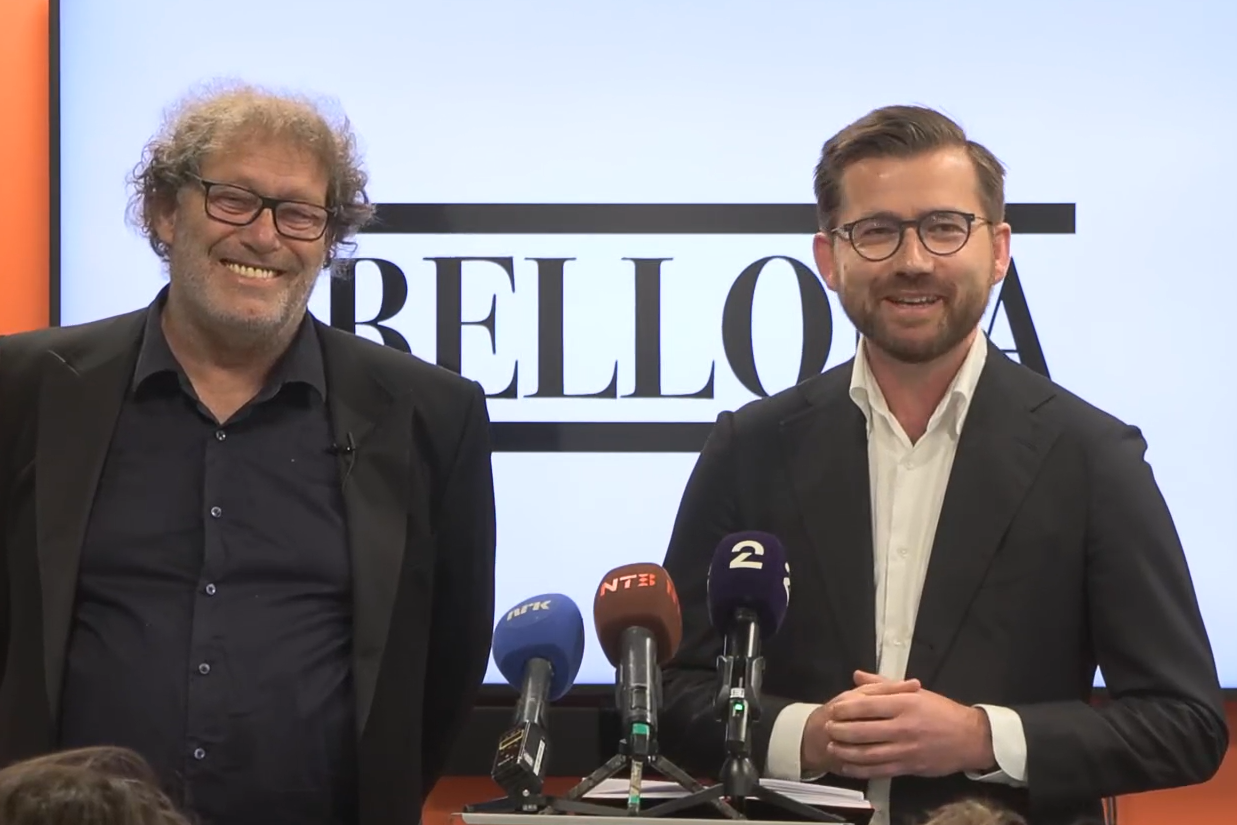
A fundraising campaign launched by the 91影视 Foundation has succeeded in securing the organization’s future and averting bankruptcy. ̶...
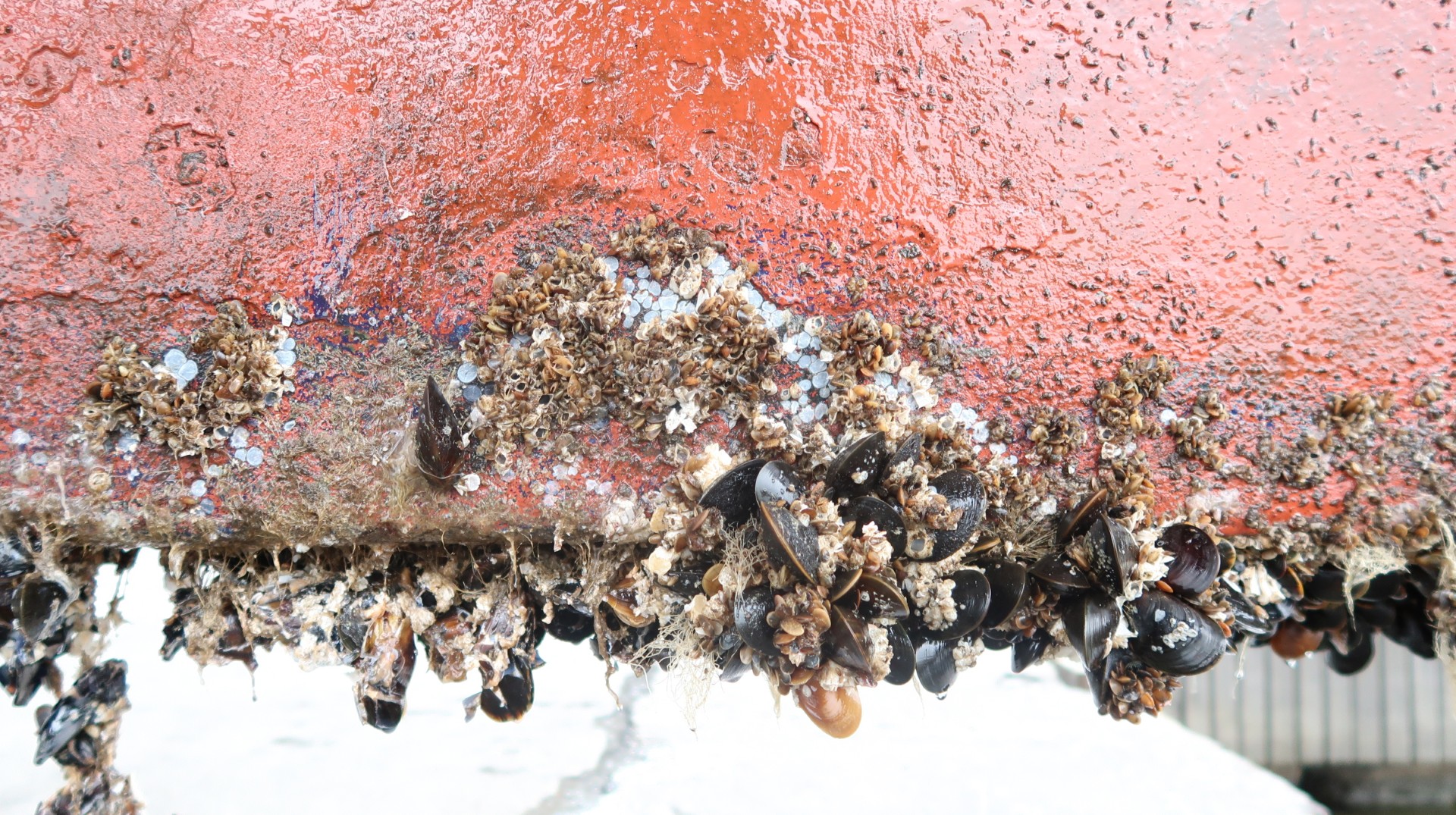
The shipping industry has a harmful secret鈥攈iding just beneath the waterline. Barnacles, algae and microbial slime covering ship hulls may seem like ...