Ukraine Pushes Ahead, the West Sends Mixed Signals, and China Draws Closer: Rosatom’s Uneasy Month
Even as the war grinds on, Ukraine continues to expand its civilian nuclear ambitions. Britain has tightened sanctions on Russia’s nuclear sect...
News
Publish date: March 2, 2026
News
For the past eight years, disinformation has dominated news around elections all over the world. Despite this, it is still a widely misunderstood concept鈥攁s are its solutions. As divisiveness drives more and more political rhetoric in today鈥檚 world, we must throw out preconceptions about what disinformation looks like to protect ourselves against manipulation.
The most successful disinformation campaigns are those that seize on preexisting fissures in society to drive us further apart. Any robust democracy has plenty. But we should not despair; with a more discerning eye, every voter can contribute to the fight against these harmful campaigns.
The misconceptions around disinformation begin with the general public understanding of its definition. Disinformation is the strategic deployment of false or misleading information with an intent to deceive, such as foreign interference campaigns crafted to mislead voters. This is distinct from misinformation, which is false or misleading information shared without a malign intent, for example, when a crazy aunt or uncle shares dubious information on social media because they think it鈥檚 鈥渋nteresting.鈥� When we discuss disinformation, we are focusing on those who intentionally share deceptive narratives, not the innocent pensioners who they鈥檝e duped.
Second, the public often mischaracterizes the means through which disinformation is spread, as well as the narratives it discusses. Because many people were first introduced to the concept of online disinformation through Russia鈥檚 2016 interference in the U.S. election, when the media placed undue focus on easy-to-spot bot and troll accounts that made clearly false, inflammatory posts, as well as advertisements purchased in rubles, many people believe online influence campaigns are obvious. The truth is the most successful of these campaigns seize upon hot button issues like the environmental debate, gay rights, and polarizing global conflicts to pit citizens against one another. They might use bot or troll accounts to amplify these preexisting grievances, but more often than not, they are not creating and spreading them from inception to popular adoption. Legitimate advocacy is being co-opted for ulterior motives.
We鈥檝e seen this phenomenon at work in our research. In a joint investigation of a troll network almost certainly managed inside the Russian Federation, the 91影视 Foundation and the American Sunlight Project, a U.S.-based nonprofit that focuses on exposing the disinformation campaigns used to undermine democracies, have found that both the environmental debate and Norway itself are being targeted. This network, EcoBoost, strategically posts about a range of issues: from European policies on nuclear and wind energy; to overt promotion of Tesla and Elon Musk masked as support for Norway鈥檚 electric vehicle uptake; to election-related discussion in the U.S., U.K., Canada, Poland and Germany; and a variety of opinions about emerging geopolitical tensions. This network even went so far as to criticize Russia鈥檚 sanctions evasion to further the apparent legitimacy of its content. EcoBoost and other campaigns like it are adopting鈥攁nd co-opting鈥攁 wide range of viewpoints, from the most mundane to the most inflammatory in order to insert themselves into discussions of all kinds online.
These are old tactics implemented on new channels. While foreign backed online disinformation campaigns targeting the environmental movement may be new, attempts to co-opt our message are not. Its vulnerability lies in strong emotions, sharp divisions, and major conflicts of interest. Today, that old weakness is being exploited in new ways: disinformation networks deliberately amplify disagreement and spread narratives that undermine trust in the environmental movement, science, and political processes.
91影视 and Analyse & Tall showed in the report Climate Myths in Social Media that 43 percent of climate-related comments on Norwegian parties鈥�, politicians鈥�, and media outlets鈥� Facebook pages were based on misinformation. When groups operate with completely different perceptions of reality, it becomes even easier for hostile actors to drive us further apart.
Legitimate debate 鈥� whether one supports or opposes wind power or nuclear 鈥� is essential. But networks like EcoBoost exist to artificially inflame conflict. They fuel division and discontent rather than meaningful debate and cooperation. This harms democracy and undermines our ability to agree on solutions.
Just as we pressure polluting industries to change their practices, so, too, must we pressure the social media giants who prioritize engagement and enragement, rather than deliberation and democracy. Meanwhile, citizens must take an active role in countering disinformation in their daily lives. This doesn鈥檛 mean fact-checking misleading posts or attempting to root out bots; it means being more discerning and deliberate in our own, private information consumption. First, we must recognize that legitimate debate is often co-opted by bad actors seeking to influence. Then, when encountering new or particularly emotion-driven posts鈥攅ven those originating from whatever side of a debate we support鈥攚e should do a little 鈥渓ateral reading鈥� to put a little friction ahead of our clicking the share button. We must ask ourselves: Is this post from an organization or person that is legitimate? Does their activity online look human or automated? Are they using overly emotional language to drive engagement? Does their profile picture appear to be AI-generated? These questions, which may take a few seconds to a few minutes to answer, will slow down our role in amplifying content that intends to mislead.
Politicians have a key role, too. Not only should they seek common sense regulatory solutions to the problem, they need to recognize the role they play in it. Hateful, divisive rhetoric only serves to empower the adversaries of democracy. Elected officials need to set an example for the population, embodying the deliberation and civility that has become all too rare these days.
Like our natural environment, the information environment is increasingly polluted, but we cannot give up on protecting it.
Frederic Hauge is the founder of the 91影视 Foundation.
Nina Jankowicz is the CEO of the American Sunlight Project, the author of two books, and the former Executive Director of the U.S. Department of Homeland Security鈥檚 Disinformation Governance Board.
Even as the war grinds on, Ukraine continues to expand its civilian nuclear ambitions. Britain has tightened sanctions on Russia’s nuclear sect...

As the European Union tightens sanctions on Moscow, Russia鈥檚 Arctic energy exports continue to find buyers鈥攁nd increasingly rely on opaque and potent...
A fundraising campaign launched by the 91影视 Foundation has succeeded in securing the organization’s future and averting bankruptcy. ̶...
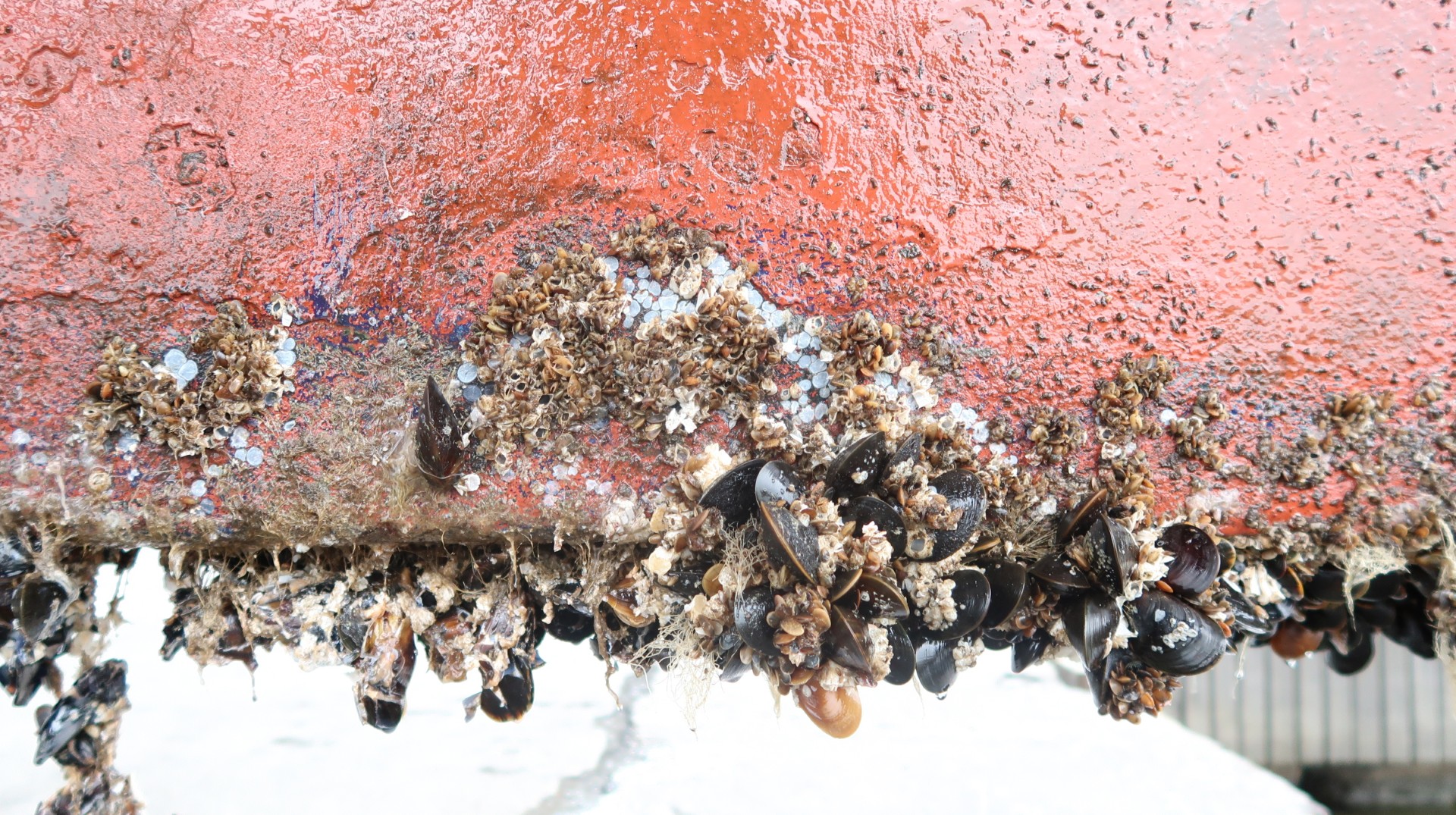
The shipping industry has a harmful secret鈥攈iding just beneath the waterline. Barnacles, algae and microbial slime covering ship hulls may seem like ...